How to Start Freelancing with No Experience
A comprehensive guide to launching your freelance career from scratch in 2025

The modern freelancer can work from anywhere, making it an attractive career option
Introduction: Why Freelancing is Worth Considering in 2025
The freelance economy continues to grow at an unprecedented rate, with more professionals than ever before choosing independent work over traditional employment. If you've been considering making the leap into freelancing but worry about your lack of experience, you're not alone. The good news? Everyone starts somewhere, and freelancing is uniquely accessible to newcomers with the right approach.
This comprehensive guide will walk you through every step of starting a successful freelance career with no prior professional experience. We'll cover how to identify marketable skills you already possess, build a compelling portfolio from scratch, find your first clients, and grow your business strategically.
Did You Know?
According to recent statistics, freelancers now make up over 36% of the U.S. workforce, with numbers expected to reach 50% by 2027. The gig economy isn't just growing—it's becoming the new normal.

The freelance workforce continues to grow year over year (Source: DemandSage, 2025)
1. Identifying Your Marketable Skills
One of the biggest misconceptions about freelancing is that you need specialized professional experience. The truth is that you likely already possess skills that clients are willing to pay for—you just need to identify and position them effectively.
Skills Inventory Exercise
Take a comprehensive inventory of your skills by considering these categories:
- Technical skills: Software proficiency, coding, design tools, data analysis
- Soft skills: Communication, organization, problem-solving, leadership
- Creative skills: Writing, design, music, video production
- Knowledge areas: Subject matter expertise in specific fields or industries
- Life experience: Unique perspectives or experiences that provide valuable insights
Don't limit yourself to skills you've used professionally. Consider hobbies, volunteer work, academic projects, and personal interests.
Pro Tip: Transferable Skills
Many skills you've developed in other contexts transfer perfectly to freelancing. For example, if you've managed social media for a student organization, you already have social media management experience that businesses would value.
In-Demand Beginner-Friendly Freelance Skills in 2025
These skills have relatively low barriers to entry while maintaining strong market demand:
| Skill Category | Specific Skills | Entry Difficulty |
|---|---|---|
| Content Creation | Blog writing, social media content, product descriptions | Low |
| Virtual Assistance | Email management, scheduling, basic customer service | Low |
| Social Media | Platform management, content creation, basic analytics | Low to Medium |
| Data Entry | Information processing, spreadsheet management | Low |
| Design | Simple graphics, social media visuals | Medium |
| Prompt Engineering | AI tool optimization, content generation guidance | Medium |
2. Developing Your Skills With Free Resources
Once you've identified potential skill areas, it's time to sharpen them to marketable levels. The good news is that you don't need expensive degrees or certifications to do this.
Free and Low-Cost Learning Resources
- YouTube tutorials - Comprehensive guides on virtually any skill
- LinkedIn Learning - Free month trial with structured courses
- HubSpot Academy - Free marketing, sales, and service certifications
- Google Digital Garage - Free digital marketing certifications
- freeCodeCamp - Free coding courses with certificates
- Canva Design School - Free design tutorials and resources
- Open-source learning communities like GitHub, Stack Overflow
Focus on Practical Application
Don't fall into the trap of endless learning without practical application. For every hour you spend learning, spend at least two hours practicing by creating real-world samples for your portfolio.
3. Building a Portfolio With No Experience
A portfolio is essential for landing freelance work, but how do you create one without previous clients? Here are strategic approaches that work:
1 Create Personal Projects
Design and execute projects that showcase your skills in action. For example:
- Writers: Create a blog with sample articles in your target niche
- Designers: Redesign existing websites or create mock brands
- Developers: Build sample applications or contribute to open source
- VA/Admin: Document your systems and organizational methods
2 Volunteer Your Services
Offer free work to non-profits, community organizations, or small local businesses in exchange for testimonials and portfolio pieces. Be strategic about who you work with—choose organizations where:
- Your work will be publicly visible
- You can make a meaningful impact
- The project aligns with your target market
3 Recreate Existing Work
Find examples of freelance work you'd like to do and create your own versions to demonstrate your capabilities. Make it clear these are practice pieces, not client work.
4 Document Your Process
For each portfolio piece, document your thought process, approach, and results. This demonstrates your problem-solving abilities and professional mindset.

Building a portfolio is essential even without prior experience
4. Positioning Yourself in the Market
With no experience, your market positioning becomes crucial. Here's how to stand out:
Find Your Niche
Rather than competing in broad categories (like "general writer"), focus on a specific industry or service type where you have knowledge or interest. Specialized freelancers can charge more and face less competition.
Strong niche examples include:
- SaaS email sequence writer (instead of general copywriter)
- Pet industry social media manager (instead of general social media)
- Real estate virtual assistant (instead of general VA)
- Health and wellness blog writer (instead of general writer)
Creating Your Unique Value Proposition
Your UVP answers the question: "Why should someone hire you despite your lack of experience?" Focus on:
- Fresh perspective: New ideas unbound by industry conventions
- Extra effort: Going above and beyond to deliver exceptional work
- Specialized knowledge: Unique expertise from other areas of your life
- Personal attributes: Reliability, communication skills, fast learning
Example Value Proposition
"I'm a detail-oriented email newsletter specialist who combines psychology insights from my behavioral science background with clear, engaging writing to create emails people actually open and read. While I'm new to freelancing, my academic research on attention and engagement directly informs my approach to creating high-converting email content."
5. Setting Up Your Online Presence
Before approaching clients, establish a professional online presence that overcomes the "no experience" objection:
Essential Online Platforms
- Professional website - Use platforms like WordPress, Wix, or Squarespace to create a simple portfolio site
- LinkedIn profile - Optimize with keywords, showcase your portfolio, and highlight transferable skills
- Freelance marketplace profiles - Create accounts on platforms like Upwork, Fiverr, and specialized industry marketplaces
- Social proof platforms - Gather testimonials on Google Business Profile or relevant review sites
Crafting Your Bio
Write a compelling bio that focuses on your skills, knowledge, and enthusiasm rather than experience:
Bio Template
"I'm a [your specialty] who helps [target clients] achieve [specific outcome] through [your service]. Drawing on my background in [relevant education/interest/skill], I [how you deliver value]. I'm passionate about [relevant interest] and bring [unique quality] to every project."
6. Finding Your First Clients
This is often the most challenging step for new freelancers. Here are effective strategies specifically for those with no experience:
Most Effective Platforms for Beginners
While it's tempting to try every platform, focus your efforts where beginners have the best odds of success:
| Platform | Best For | Beginner-Friendliness |
|---|---|---|
| Fiverr | Defined, packaged services | High |
| Upwork | Varied project types, longer-term work | Medium |
| Local business networking | Service-based businesses in your area | High |
| Facebook groups | Finding clients in specific niches | Medium |
| Reddit subreddits | Specific skill-based gigs (r/HireaWriter, etc.) | Medium |
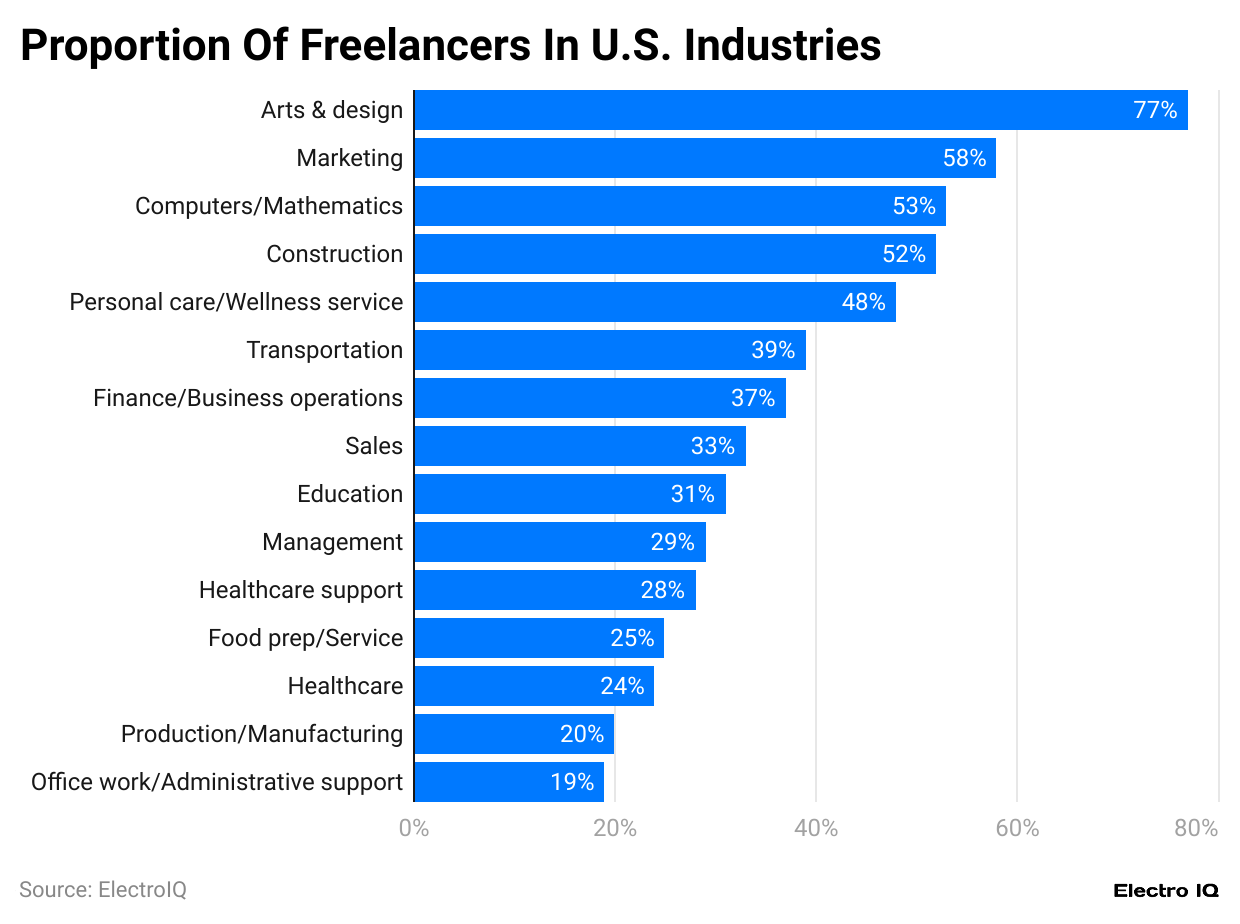
Distribution of freelancers across different industries (Source: Electro IQ, 2025)
Proactive Client Acquisition Methods
Don't just set up profiles and wait. These proactive approaches work for beginners:
1 The Warm Introduction Method
Make a list of everyone you know who might need your services or know someone who does. Reach out personally with a specific offer to help.
2 The Problem-Solver Approach
Identify businesses with specific problems your skills can solve. Research them thoroughly, then reach out with tailored suggestions, not generic pitches.
3 The Strategic Underpricing Strategy
Initially offer services at below-market rates in exchange for detailed testimonials and portfolio pieces. Be clear this is an introductory rate to build your portfolio.
4 The Value-Added Pitch
Instead of selling your service, offer something valuable for free (analysis, suggestions, resources) that demonstrates your expertise.
Avoid Common Pitfalls
When starting out, avoid common mistakes like:
- Sending generic pitches to dozens of potential clients
- Competing solely on price without emphasizing value
- Overselling your capabilities beyond what you can deliver
- Working without clear agreements and scope definition
7. Setting Your Rates Strategically
Pricing is challenging for new freelancers. Here's how to approach it strategically:
Research-Based Pricing
Start by researching what others charge for similar services. Check:
- Freelance marketplace listings
- Freelancer websites in your niche
- Industry surveys and reports
- Freelance communities and forums
Pricing Structures for Beginners
Consider these pricing approaches:
- Project-based pricing: Charge per deliverable rather than per hour (reduces risk for clients)
- Tiered packages: Offer different service levels at different price points
- Value-based introductory offers: "First project discount" in exchange for testimonials
- Milestone-based payments: Break projects into paid stages to reduce risk
The "Rule of Three" Pricing Strategy
Create three pricing tiers: Basic, Standard, and Premium. Most clients choose the middle option, so position your preferred package there. This structure gives clients choice while guiding them toward your preferred offering.
8. Delivering Excellence to Your First Clients
Your first clients are the foundation of your freelance business. Here's how to exceed expectations:
Client Onboarding Process
Create a professional onboarding process that includes:
- Welcome packet with process overview
- Clear scope of work documentation
- Timeline with specific milestones
- Communication expectations and preferences
- Required information and materials from the client
Over-Delivering Strategies
Ways to stand out with your first clients:
- Deliver ahead of deadlines when possible
- Provide unexpected "bonus" elements beyond what was promised
- Offer insights and suggestions beyond the scope of work
- Follow up after project completion to check results
- Create case studies showcasing the value you delivered
Requesting Testimonials and Referrals
After successful completion:
- Ask for specific feedback on your work process and results
- Request a formal testimonial with permission to use it in marketing
- Ask if they know others who might benefit from your services
- Offer a referral discount or incentive for successful introductions
9. Building Systems for Sustainable Growth
As you gain experience, focus on building systems that will support your growing business:
Essential Business Systems
- Client management system - Track leads, current clients, and past clients
- Project management workflow - Standardize your process for consistency
- Financial tracking - Monitor income, expenses, and profit margins
- Time tracking - Understand how long tasks take to improve estimations
- Marketing calendar - Plan consistent outreach activities

Distribution of freelancers on major platforms like Upwork (Source: DemandSage, 2025)
Avoiding Burnout
New freelancers often experience burnout by taking on too much work or the wrong kind of work. Prevent this by:
- Setting clear work boundaries and hours
- Gradually increasing your rates as you gain experience
- Learning to identify and avoid problem clients
- Building in time for skill development and rest
- Creating a support network of other freelancers
10. Scaling Beyond Beginner Status
Once you've established yourself with initial clients and projects, focus on strategic growth:
Growth Milestones
Track your progress through these typical freelance growth stages:
- Portfolio building - Focus on gaining diverse examples and testimonials
- Consistent client acquisition - Develop reliable methods for finding new clients
- Rate optimization - Gradually increase rates with new clients and existing clients
- Specialization - Narrow your focus to become known for specific expertise
- System refinement - Optimize your workflows for maximum efficiency
- Expansion - Consider subcontracting, creating products, or other scaling methods
When to Raise Your Rates
As a new freelancer, consider increasing your rates when:
- You're consistently booked 2-4 weeks in advance
- You've completed 5-10 successful projects with positive feedback
- You've significantly improved your skills or added new capabilities
- You're turning down work due to capacity limitations
Start by increasing rates by 15-25% for new clients, then gradually bring existing clients to your new rate structure.
Conclusion: Your Freelance Journey Starts Now
Starting a freelance career with no experience may seem daunting, but with the right approach, it's entirely achievable. Remember that every established freelancer once started exactly where you are now—at the beginning.
The key to success is taking consistent action, focusing on delivering value to clients, and continuously improving your skills and systems. Instead of waiting until you feel "ready" (which might never happen), start with small steps today that move you closer to your freelance goals.
By following the strategies outlined in this guide—identifying your marketable skills, building a portfolio, finding your first clients, and delivering excellent work—you can overcome the "no experience" hurdle and build a thriving freelance business in 2025 and beyond.
Your First Week Action Plan:
- Complete your skills inventory and identify your top three marketable skills
- Choose one skill to focus on initially and create your first portfolio piece
- Set up a basic LinkedIn profile optimized for your chosen service
- Research and join one freelance marketplace appropriate for your skills
- Reach out to three people in your network who might need your services or know someone who does
Remember, the most successful freelancers aren't necessarily the most talented—they're the most persistent. Start where you are, use what you have, and do what you can. Your freelance journey begins today.
Comments
Post a Comment